GLOBAL WARMING: ENVIRONMENTAL CHALLENGES AND HUMAN COSTS, A FOCUS ON NORTHERN NIGERIA
Northern Nigeria has an arid to semi arid climate and records some of the highest temperatures in the country. In recent years, the region has become hotter, drier, and more difficult to live in. Although climate change is a global phenomenon, local activities have made the situation worse. Desertification, illegal tree felling, and the abandonment of farmlands because of terrorism have combined to damage the environment, reduce agricultural production, and place millions of people at greater risk.
One of the most visible signs of environmental decline in Northern Nigeria is the southward movement of the Sahara Desert. States such as Borno, Yobe, Jigawa, Katsina, Sokoto, Kebbi, and Zamfara continue to lose fertile land as sand dunes spread into farming communities. According to the Food and Agriculture Organization (FAO), the Sahara Desert advances south by between one and ten kilometres every year. As vegetation disappears, exposed soil absorbs more heat from the sun, making temperatures even higher. Farmers who depend on rainfall now contend with poor harvests, declining soil fertility, and shrinking water sources.
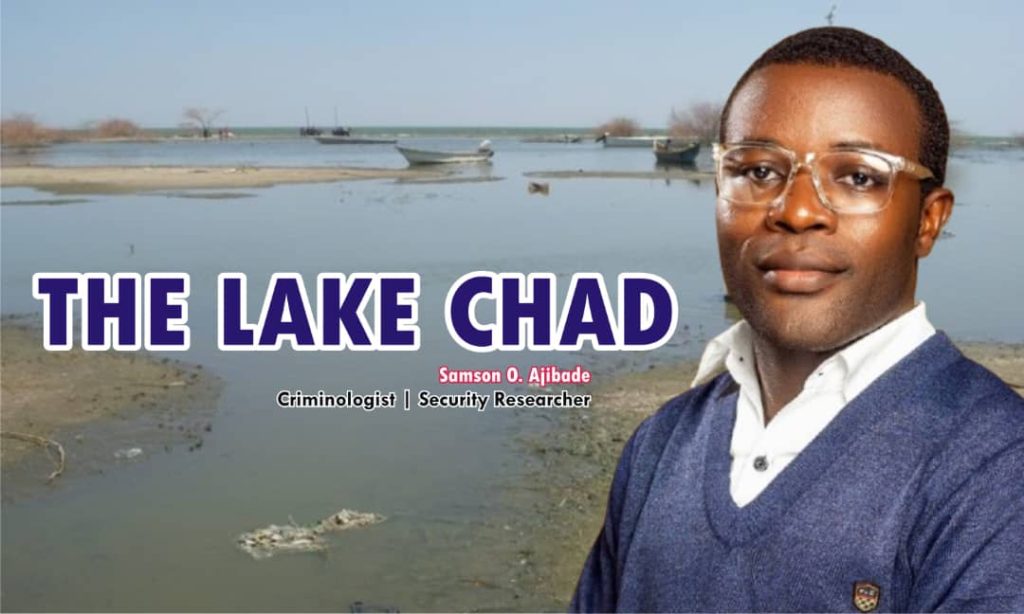
Another major concern is the condition of Lake Chad. Once one of Africa’s largest freshwater lakes, it supported millions of people through fishing, irrigation, farming, and livestock production. According to the Food and Agriculture Organization, Lake Chad has lost about 90 percent of its surface area since the 1960s. From about 25,000 square kilometres in 1963, the lake has reduced to roughly 1,350 square kilometres during periods of severe drought. The shrinking lake has affected farming, fishing, trade, and pastoral activities across Nigeria, Niger, Chad, and Cameroon.
The loss of Lake Chad has produced consequences that go far beyond the environment. Families who depended on the lake for their livelihoods have lost their primary source of income. Food production has declined, poverty has increased, and many young people have been forced to migrate in search of work. The Food and Agriculture Organization notes that agriculture, livestock production, and fisheries provide livelihoods for about 90 percent of the population living within the Lake Chad Basin. As these opportunities disappear, criminal groups and violent extremists find it easier to recruit vulnerable young people who have few economic alternatives.
Illegal tree felling has also worsened environmental conditions across Northern Nigeria. Trees reduce surface temperatures by providing shade, protecting the soil, retaining moisture, and reducing wind erosion. Their removal leaves the ground exposed to direct sunlight and allows desert conditions to spread more rapidly. Large quantities of trees are cut every year for charcoal production, firewood, and commercial timber without corresponding reforestation efforts. The result is the gradual destruction of forests that once protected farming communities from advancing desert conditions.
Satellite studies have confirmed the scale of environmental damage. An assessment covering 1984 to 2016 found that Northern Nigeria lost approximately 45,945 square kilometres of vegetation cover, while bare land expanded across many parts of the region. The findings support repeated calls for stronger enforcement of environmental laws and greater investment in afforestation projects, including the Great Green Wall initiative.
Environmental degradation is no longer driven by climate factors alone. Terrorism has also become an environmental problem. Since the Boko Haram insurgency began, thousands of farmers have abandoned their farmlands across Borno, Yobe, and Adamawa States because of repeated attacks, kidnappings, and killings. Land that once produced crops has remained uncultivated for years. Without farming activities and proper land management, vegetation disappears, the soil loses moisture and nutrients, and erosion becomes more severe.
The consequences extend far beyond agriculture. As food production falls, prices rise, household incomes decline, and hunger becomes more severe. Communities that once relied on farming become dependent on humanitarian assistance. Some displaced families never return to their ancestral lands because insecurity continues to prevent agricultural activities. What begins as a security problem soon develops into an environmental and economic problem.
Climate change and insecurity now reinforce one another. Environmental degradation destroys livelihoods, while terrorism prevents farmers from returning to their land. The longer this cycle continues, the more difficult it becomes to restore food production, rebuild local economies, and improve living conditions across the region.
Northern Nigeria now records temperatures that frequently exceed 40 degrees Celsius during the hottest months of the year. Extreme heat affects agricultural workers, traders, school children, security personnel, and healthcare systems. Heat related illnesses have become more common, water supplies continue to shrink, and livestock losses have increased in many communities.
Climate change should no longer be viewed only as an environmental issue. It has become a matter of national security, food security, economic development, and public health. Environmental degradation fuels poverty, displacement, resource competition, and social tension. At the same time, insecurity prevents governments and communities from restoring damaged ecosystems or expanding agricultural production.
The response must extend beyond planting trees. Governments at all levels should strengthen environmental protection laws, enforce sanctions against illegal logging, invest in large scale afforestation, improve irrigation systems, and expand programmes that encourage sustainable farming practices. Security agencies must also create conditions that allow displaced farmers to return safely to their communities and resume agricultural activities.
Scientific research, satellite monitoring, and early warning systems should receive greater government support. Agencies such as the Nigerian Meteorological Agency, the National Space Research and Development Agency, and the National Emergency Management Agency have important roles in climate monitoring, disaster preparedness, drought assessment, and emergency response. Their findings should guide environmental planning and public policy.
The environmental problems facing Northern Nigeria will not disappear on their own. Every hectare of forest lost, every abandoned farmland, every shrinking water body, and every delayed policy response places more pressure on communities already struggling to survive. Protecting the environment is no longer only about conserving nature. It is about protecting livelihoods, strengthening food production, reducing insecurity, and safeguarding the future of millions of Nigerians.
Climate change is no longer a conversation reserved for international conferences. It is already affecting farmers in Borno, herders in Yobe, fishermen around Lake Chad, and families whose livelihoods depend on the land. The evidence is visible across Northern Nigeria. The question is no longer whether the crisis exists, but whether enough is being done to slow it.